By Gina, first time traveler
A few days before returning home to Bloomington, Minnesota after serving at the Teresa Toda camp for girls ages 5-18 in Azua, Dominican Republic, the reality finally hit me: I was going to say goodbye to these girls.
The thought brought me to tears. I had to walk away. I had to be alone because I couldn’t control my emotions.
The origin of the camp started 29 years ago by St. Edward’s parishioners. The Parish’s Sister Community relationship mission since then, has been to provide a summer vacation bible school camp experience for girls with difficult living situations. In addition to learning about the bible, doing crafts, and playing games, it is a time for the girls to be fed and feel safe. This was my first time going on the 10-day adventure.
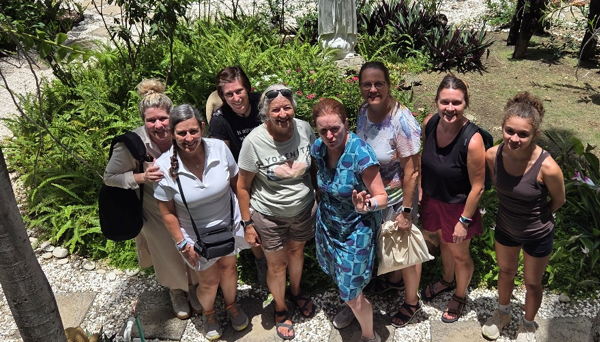
Early into the trip, there was one girl in particular that stood out to me.
We’re not supposed to have favorites. Favorite ice cream? That’s easy. Black Cherry Chocolate. Why? It tastes good. But why is one child your favorite? How does it happen?
We knew a little about why some of the girls were there. Parents have passed away, or are unable to care for them. I learned that “my favorite” wanted to grow up to be in the military like her dad. On the day of our field trip to Santo Domingo, we drove past a large government building. I noticed it was the Department of Defense building. I pointed it out to her and said, “mira, militar!”, which means look, military. She saw the building and smiled at me.
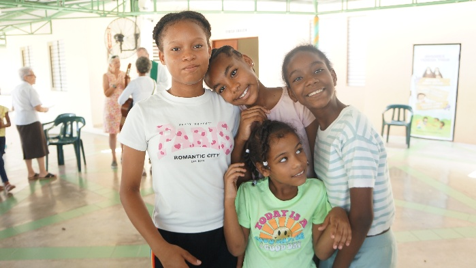
At camp she resolved disputes – sometimes using Rock, Paper, Scissors. She was very present. She wanted to learn. She helped. She seemed tough. Not in a I will fight you way but in a I will defend and protect you kind of way. And she was a leader. She was resilient.
Maybe that’s why she stood out to me.
Perhaps resilience is something I admire. The word resilience has a positive connotation. Nobody ever uses it negatively. Perhaps it is because I was a resilient child myself. I knew how to be quiet, follow directions, be dependable, and step up when needed. When you really think about it, something bad had to happen in order for resilience to exist. And by me being resilient means you don’t have to deal with it because I am dealing with it. Looking back, I wonder whether that resilience came from strength or from fear. Did I become capable because I was gifted with courage, or because circumstances demanded it? Was I resilient because I had no other choice?
Children are never responsible for where they were born, the families they were born into, the opportunities they received, or the hardships they inherited. Yet some children learn to carry enormous burdens with remarkable grace. They become dependable. They adapt. They survive.
I’ve known about this camp for over 25 years because I know one of the founding organizers. I was told repeatedly that the hope was that these girls would associate school with joy, safety, friendship, and possibility. When they became old enough to make choices for themselves, they would choose education. They would choose to return. They would graduate from high school, and they would be better equipped to help their communities and future families if they became mothers. The camp existed to help the girls understand their own value, have hope, and encourage them to follow their dreams by staying in school.
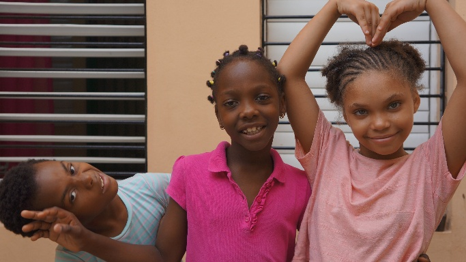
And that matters. I believe in that mission. I support that.
For years, I resisted going on the camp mission trip. I always had reasons. I didn’t have vacation time. I couldn’t afford it. Work was too busy. My kids needed me. Instead, I found other ways to support it. My daughter even went twice.
Then, one by one, every excuse disappeared.
My company offered to pay my wages for a week if I participated in a mission trip. I could offer my skills to create a video to promote future mission trips. I had airline benefits. And my kids were grown.
The door kept opening.
Eventually, I could no longer say no.
So, I found myself traveling far outside my comfort zone to a place with heat, bugs, no air conditioning, and a culture very different from my own. I was navigating anxiety, poor sleep, and all the surprises that came with middle age. I spoke almost no Spanish despite taking four years of it decades ago.
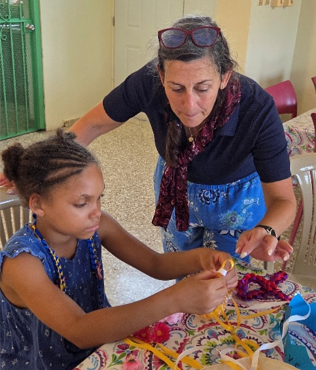
Through Google Translate, coloring books, friendship bracelets, giant Uno cards, and matching games, conversations happened. The girls would ask if I was married. They wanted to know about my children. We shared stories through my phone, translating back and forth.
One day, we visited communities where families struggled with poverty and limited opportunities. We met the brother of a past graduate from the school, who told us he needed to leave Azua and get to the United States. My immediate thought wasn’t agreement. It was sorrow. I wanted to tell him that the answer shouldn’t be leaving his family behind. The answer should be creating opportunity where he already lived.
At this stage of my life, I am comfortable with my experience. In my career, people come to me with difficult questions. I have enough experience to understand possible outcomes. I can consult. I can advise. I can help people solve problems.
I like that.
What unsettled me about this trip was that I encountered problems I could not solve, like the brother feeling his only option was to leave. I had no solutions. Wanting something and knowing how to achieve it are two very different things.
Poverty. Injustice. Circumstance. The consequences of where and when we are born.
Some call these ‘God Problems’. Problems that seem impossible for any individual to solve.
I received my first reconciliation, communion and confirmation when I was 29 or 30. I can’t remember. But I do remember asking the priest in one of the preparation classes a philosophical question about communion. He scoffed and said, “You don’t need to worry about all that .” And he simply ended by saying, “You can’t have communion without community.” I have stood on these words. We are not meant to worship alone. We are not meant to serve alone. We are not meant to solve problems alone.
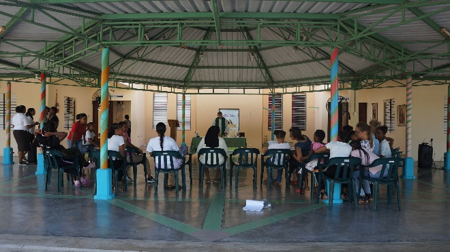
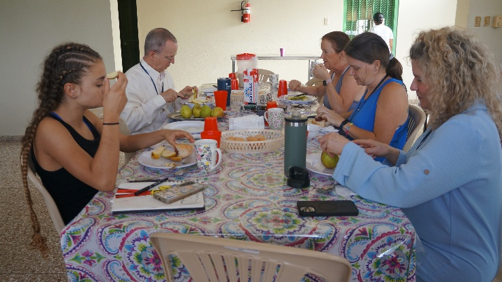
We had created a wonderful week. We all learned the song Courageous by Megan Nicole. We practiced English and math. We were obsessed with making Hawaiian leis. One of our travelers was from Hawaii. We learned the bible stories of Esther, Catherine of Sienna, Mary Magdalene, and the Syrophoenician Woman. We learned about The 7 Habits of Highly Effective Teens. We danced while waiting for dinner. We shared our favorite part of the day during circle time. And we celebrated mass together – once outside with the chickens, cats, and doves going about their business behind the priest. We even had these tiny little Jesus figurines that we would leave in various places to say that Jesus is everywhere. We coined it Jesus-caching. We had given the girls joy, encouragement, and a reason to return. But we could not guarantee that they would have the freedom to choose that path.
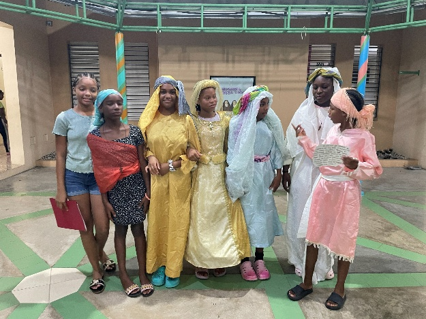
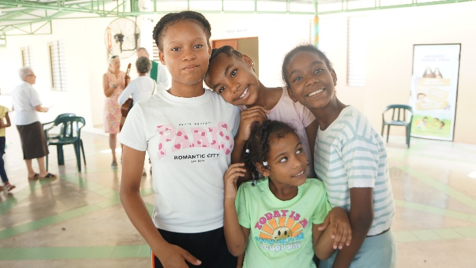
The girls can choose school. They can choose camp. They can choose to dream. But sometimes the choice is taken from them. A family may need help caring for younger siblings. A grandmother may make a different decision. A parent may prioritize survival over education. Circumstances may remove options altogether. On the last day of camp, I learned that was the case for two of the girls. One did not return to camp despite us trying to pick her up (at the time I did not understand why she was not coming with us) and the other knew that this would be her last camp and most likely would not return to school.
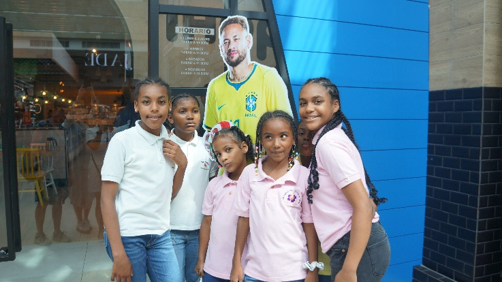
Before and throughout the trip, I prayed for our team. I prayed for strength and energy. I prayed for the sisters who run the school. I prayed for the workers who serve the girls. I prayed for the girls.
I prayed for everyone except the families.
I did not realize I had overlooked them until the end of camp.
Now my prayers begin there.
I pray that families receive what they need so they can care for their children. I pray that parents are given opportunities, resources, and hope. I pray that children are allowed freedom to make good choices. I pray for communities strong enough to support families before they reach a crisis.
The night of the long goodbyes was torture. I was not just saying goodbye to a favorite, I was saying goodbye to all the girls, and they were now all favorites with their own unique strengths. All these amazing, resilient girls were unmatched in how I grew to care about them.
Tears and more tears. I would have my tears under control and then I would see a girl sitting in a chair crying and then my tears would start again. “Un abrazo mas”, I repeated. Un abrazo mas means one more hug. Un abrazo mas turned into dos, tres, quatro with no end in sight.
The next morning, we awoke early to leave for the airport and were surprised when 10 of the girls awoke early to say one last goodbye. Un abrazo mas.
We drove away and I wiped tears while waving goodbye. The girls waved, made heart signs, said I love you in sign language and even made the Hawaiian shaka sign.
I am grateful that these girls are resilient, but I pray for a day when they do not need to carry burdens normally carried by adults.
A day when they do not need to make our lives easier by becoming stronger than they should have to be.
A day when camp, school and dreams are not taken away.
Those are my prayers.
And that is why saying goodbye was so hard.


So very well articulated. Thank you for the perfect summary of the camp experience and the needs of these girls AND their families ❤️❤️
Reading your post brought me back to my years at camp and the many emotions that I experienced year after year. By reading your words, I know you had a lasting impact on each and every girl at camp. Thank you for sharing such a heartfelt post.