Tag Archives: Mission Trip

Campamento 2025 Day 1

16 Jun

Today was the first day of “formal” (ish) camp. Let’s start with a new-to-me prayer for campers. 

St. Therese said,

May today there be peace within. May you trust that you are exactly where you are meant to be. May you not forget the infinite possibilities that are born of faith in yourself and others. May you use the gifts that you have received and pass on the love that has been given to you. May you be content with yourself just the way you are. Let this knowledge settle in your bones, and allow your soul the freedom to sing, dance, praise, and love. It is there for each and every one of us.

I discovered this prayer when my sister-in-law gave me an inspiring tour of JPH, a healing center. A poster of this prayer caught my eye because parishioner Therese, named for St. Therese, joined camp this year. Each sentiment aligns perfectly with our hopes for Campamento! This year, we’ll read this as a reflection at the beginning of each traveler meeting. It might become a new tradition!

Today, our woman of faith is Abigail from the Old Testament. What an interesting story of bravery and humility. I encourage you to read it and learn the context. It was such a long story, we had three readers, and the girls listened very well! They answered our “what happened”  questions in our opening ritual. 

The song Lauren Daigle – You Say (Lyrics) is coming along nicely, too, starting with “oo, oh!” 

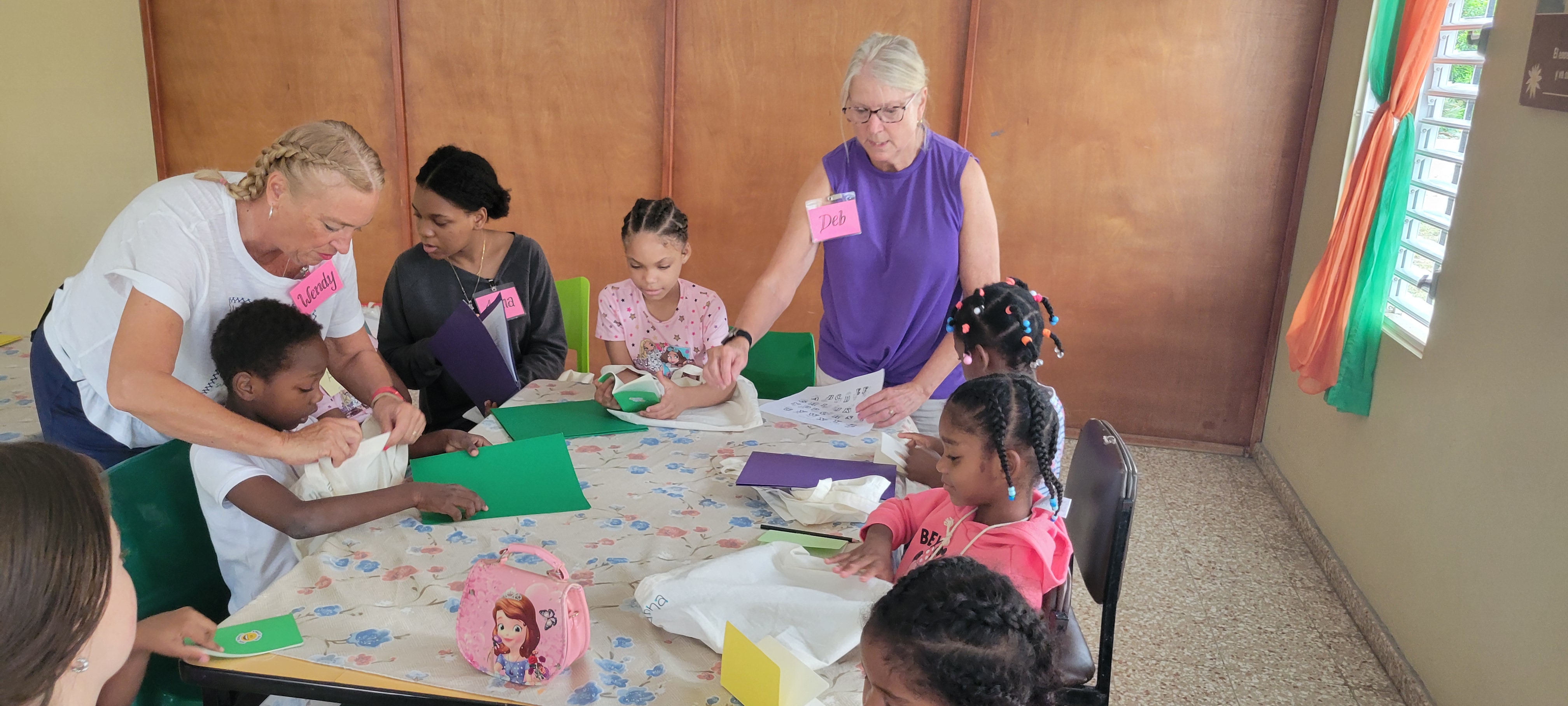
We had the three stations: English, math, and reflection. We are fortunate to have educators traveling this year. They developed creative lesson plans. The girls are engaged! With so many travelers, they are getting a lot of 1:1 attention.

The older girls learned about internet safety. They said they’ve heard it all before, but Mary had some provocative questions that made them think (we hope) before the post. 

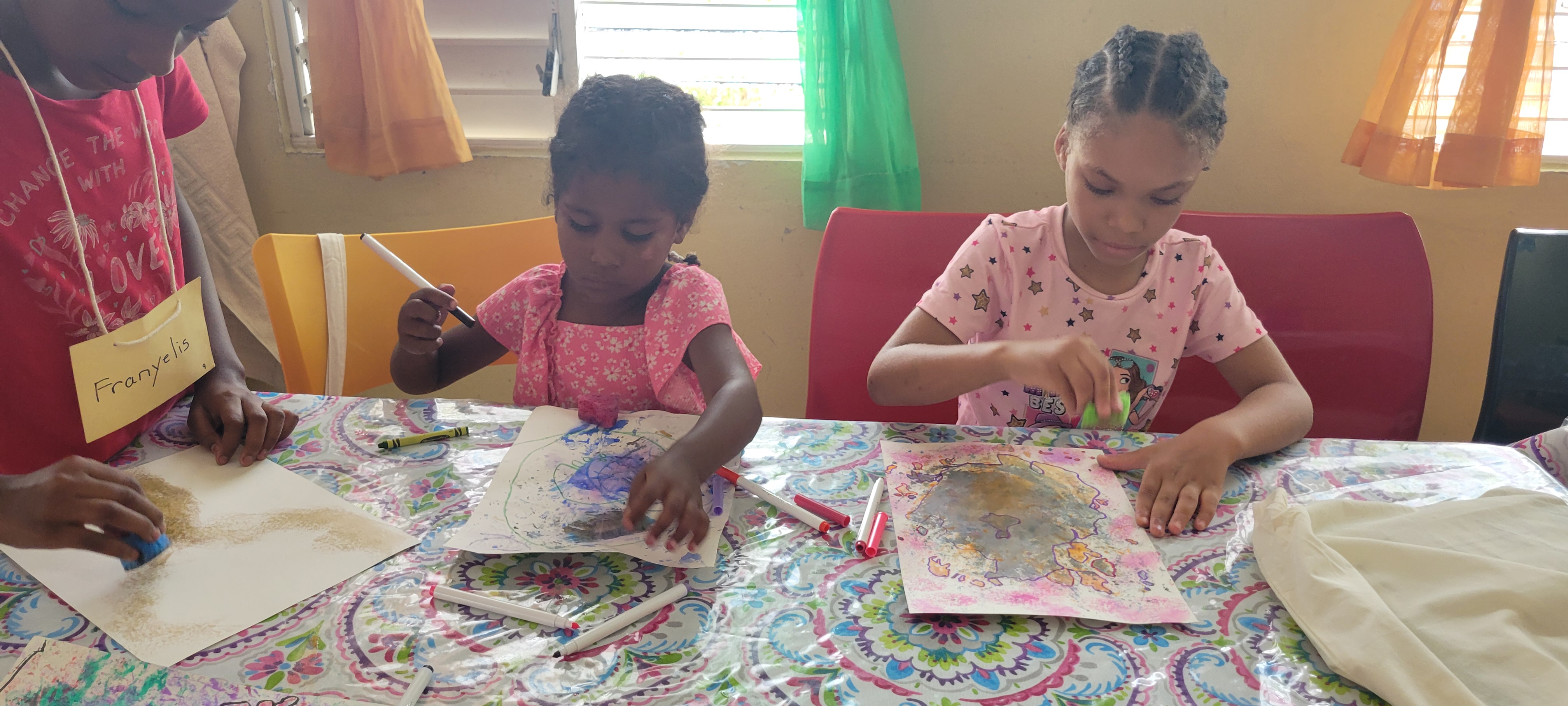
Shelly and Kathy led the art activities. This year, the most artistic girls are repainting the mural at the entrance under Shelly’s guidance. It’s going to be so cool!! Shelly also led the girls in the craft of the day. They came out cute!

After lunch, we had a siesta, played games, and did puzzles, then hopped in the pools. It’s a hot one today, so it feels great. 

Thank you for reading about Day 1 of Campamento!

Campamento 2025 Travel Day and Day 0

15 Jun

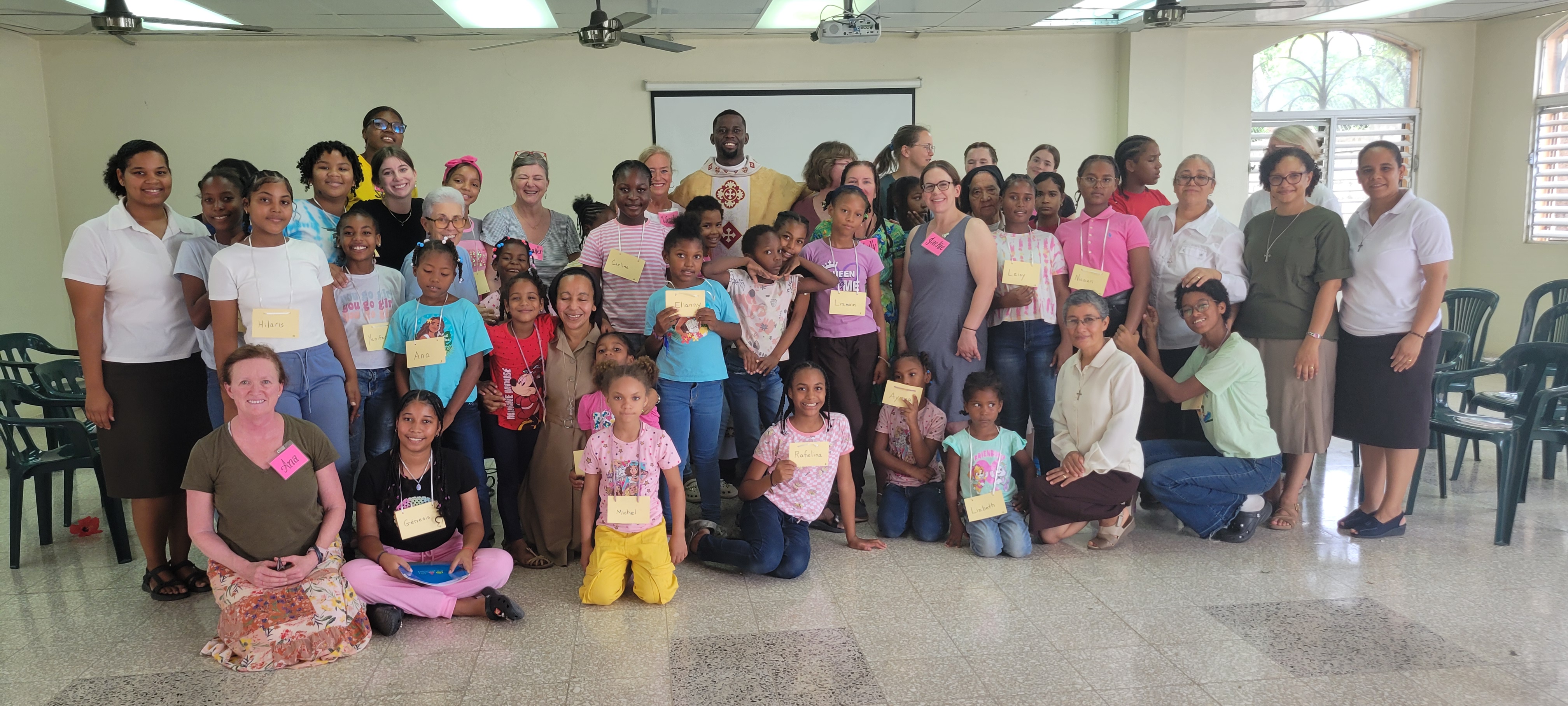
Travel day started at MSP at 3:25 AM on Saturday. The counters open at 3:30 AM. Kathy and Shelly stayed with me. Everyone else made their flights! It’s worth the trouble to leave early, so we arrive in the daytime. Two of us took Delta, and the rest took American. Jackie was already here in the country when we arrived. Sister Grace, Sister Stefanie, and Job picked us up in the guagua, plus a small truck for the luggage. Not much to report, except that for the first time, one bag was stuck in Miami. It arrived today (Sunday) in Azua. So, we left the airport later than usual because they had to report the missing bag, etc.  We did stop at El Carmelo to visit with the Sisters there, enjoy a delicious first meal, and take our traditional traveler group photo in the beautiful garden. 

Arriving at Camp is a unique experience; you have to be here to see it! When we arrived, they were dancing on the kiosk and just started screaming. It was so cute and so fun. 

Soon after was evening circle time of prayers, reflection, and welcoming us. We felt very welcomed and very tired!

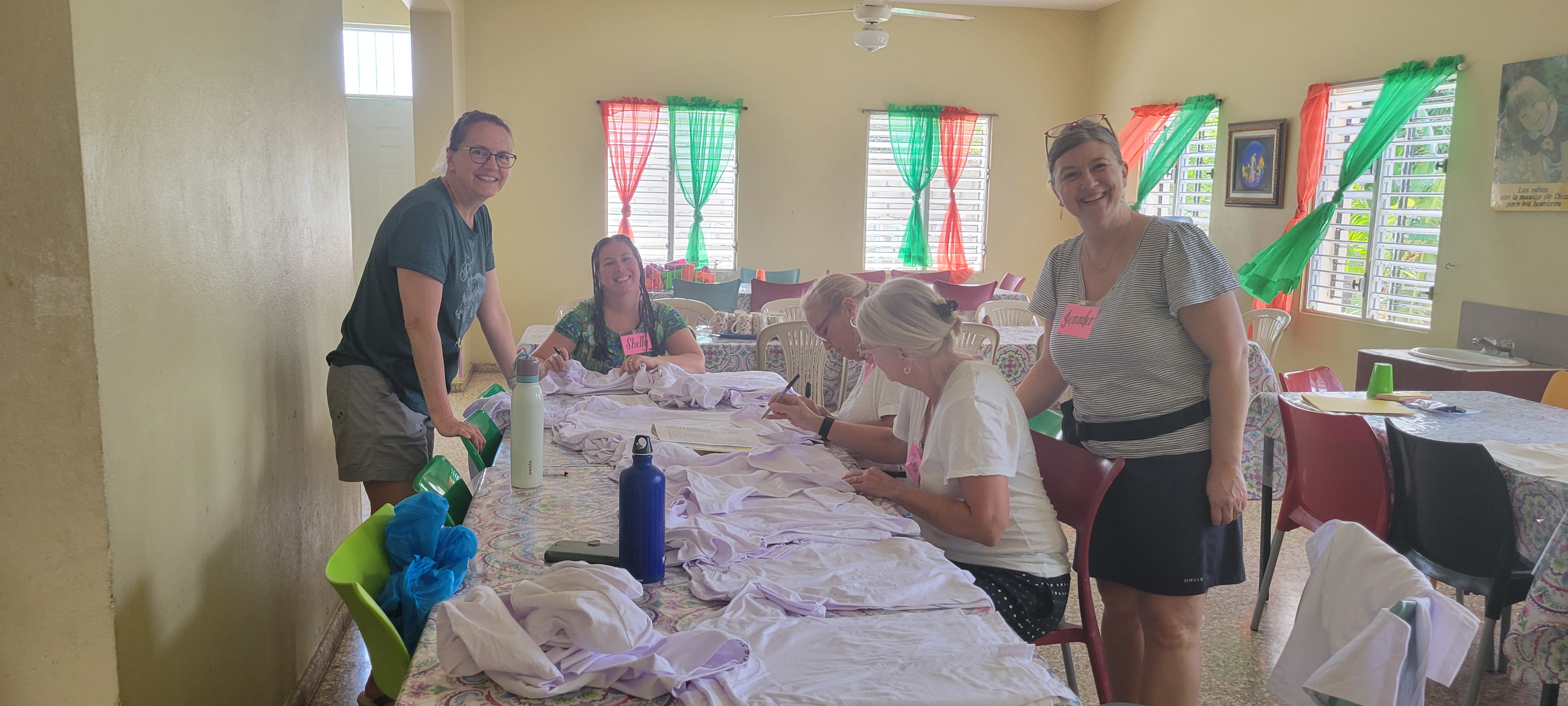
On Sunday, we had a small breakfast and then started camp. We had circle time with a prayer and then introduced this year’s theme song, “You Say” by Lauren Daigle, and the name-learning game. Some of the travelers played with the girls more (rock, paper, scissors) while others organized the bags and readied the t-shirts for tie-dying! 

Mass at 11 AM was an experience, as always. A new (to us) priest came to do the Mass. We celebrated the Solemnity of the Most Holy Trinity. The girls, led by Sister Fifi, sang, and everyone was on their best behavior.

<photos>

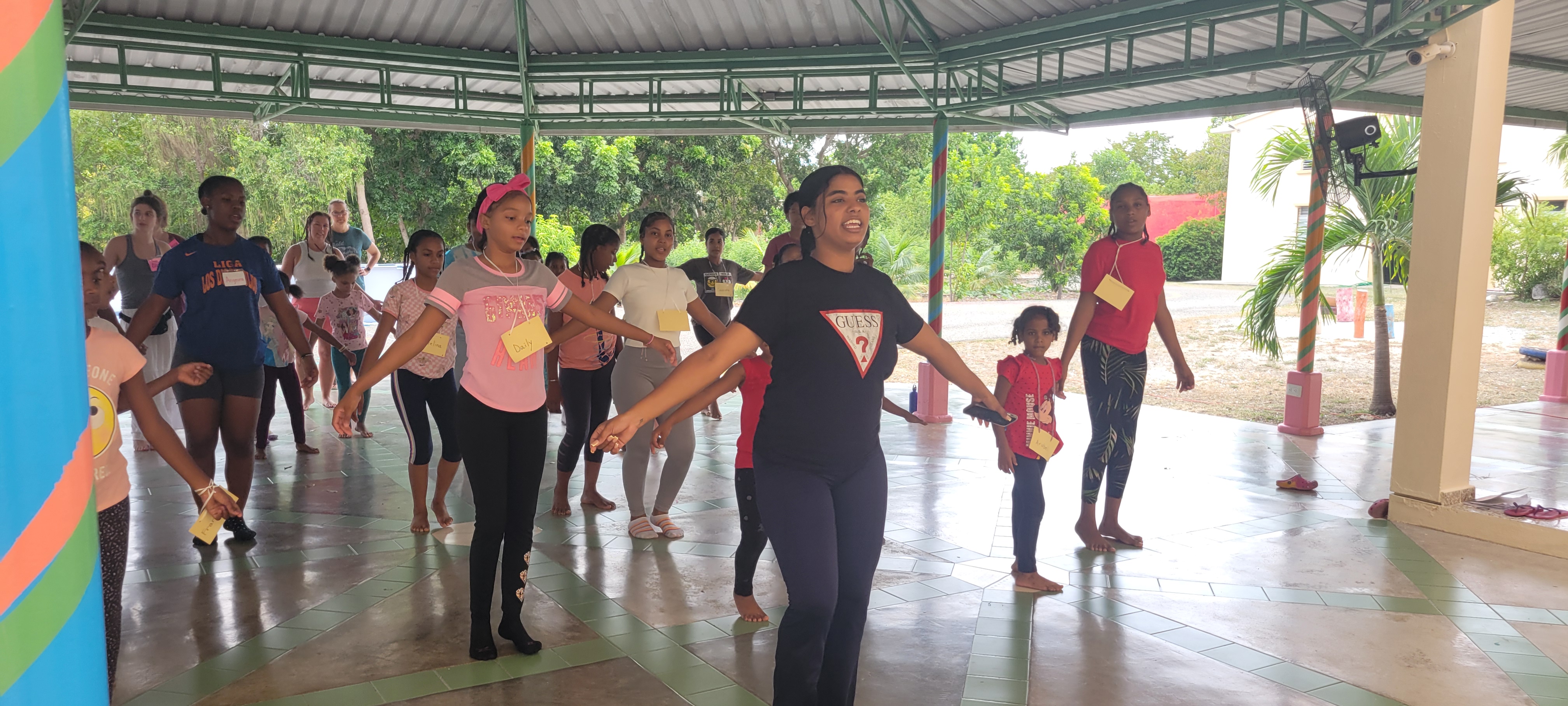
After a huge lunch, a dance teacher came. It was her third Sunday here. The kids loved her, and we did, too. Each of us participated as we could. She’s a pro! The Sisters are so creative, providing the girls with enrichment programs like dance, tutoring, crafts, etc.

The girls then jumped in the pools and dyed their T-shirts. They are now soaking overnight, and they can wear them on this week’s excursion.

It was a busy, fun weekend!

Ann

A Challenging Read – Guardian Article about “Voluntourism”

18 Jan

This article by the Guardian in 2018 hit me hard – challenging me to reflect on Campamento.

  • Are we – travelers, supporters, and I – “sustain[ing] practices and institutions that actually do harm“?
  • Is Campamento “about having a big emotional experience that validates privilege“?
  • “Hogar Seguro Virgen de la Asunción” sounds horrific and is now closed. This was a Catholic institution. Could this happen to our Hogar? Is our Hogar like the more humane but “chaotic, impersonal and lacking stimulation” Hogar?
  • How about this description the reporter gave of her feelings after a summer of working at a home for boys in Detroit?

“I now understand that I did leave Rodrick with something: a sense of abandonment. Every single boy in that institution already had abandonment issues. If it was hard for me to leave these boys behind, how much harder was it for them to see me go? And the next adult who came for a few weeks? And the next one? They might have learned that there are people who love them and will take them on walks. But they also learned that these people always leave.

  • Is our Hogar spending “not much money […] on its most vulnerable, disabled residents, while a lot of investment has gone towards making the volunteer experience as comfortable as possible“?

On my first read of this article, I was reading it defensively – thinking “That’s not what we do.” “Our Hogar is not like that.” Then, I read it again with a more open mind.

Update 2022 – another article outlining two sides of voluntourism. https://www.worldvision.ca/stories/voluntourism-the-good-and-the-bad Their suggestion to teach local English teachers is interesting!

Here are my thoughts. I’d love to hear yours.

Are we sustaining practices that actually do harm? The reality is we aren’t sustaining anything. The home does not exist to host Campamento. Campamento is a small, optional part of a comprehensive program that is the Hogar. The Sisters provide the foundation of the Hogar. Campamento (I hope) merely enhances the program that they design and run.

As for doing harm – I’ve seen the opposite. Many girls thrive at the family-like setting at the Hogar. (For those who don’t like it for whatever reason, they can return to their homes.) They get basics like safety, a home, food, school, tutoring (many of their parents are illiterate), values, self-esteem, chores, affection, and support from each other.

An old practice, not used any more, was to invite girls to camp before joining the Hogar, to see if she’d like it. One year a new girl came and she had a very tough exterior, was very skeptical of camp (pretty reasonable from a kid who’s never seen anything like the Hogar or experienced anything like camp.) She stuck with it though. Two days later, another new girl joined. The next girl’s response was to cry all day. I’ll never forget what girl #1, with her 2 days off experience told girl #2 “This place is not that bad. The women here are nice and they feed you three times a day.” Girl #2 wiped away her tears, then joined the game going on. Both girls thrived for a while at the home. Neither stayed through graduation.

The education piece is major, even if a girl leaves before graduation, she receives a much better education than she would have otherwise. Many continue their education, even after leaving the home. But it is harder without the support they get at the Hogar.

By “enhancing”, we run a 2 week summer camp with: Bible study themed “Women of Faith”, educational enrichment focusing on math and English, as well as crafts, games, songs, skits, and free time. Our focus is on self-confidence and self-esteem. Many well-off families send their kids to similar camps over the summer. We also work with the director of the hogar on the curriculum to make sure we’re a positive influence at the home.

Over the last 19 years, we’ve had a lot of positive feedback from the Sisters, the girls, and even the community. Here’s my two favorite: A new driver joined the home. At the end of camp, when he was bringing us back to the airport, he said “Many groups come to visit the girls, bringing donations or holding a party. I’ve only seen the girls cry when you leave.” The other is when Sister Fifi took the reins as director of the hogar soon after camp the previous year. She said that she was looking forward to camp and can’t believe it’s finally here. I asked her why, because summer is usually a break for her and camp is a ton of work for her! She said “Since I joined, all I heard was ‘at camp we do this, at camp we do that. The girls talk about camp all year long.” At the end of camp, she told us that she now knows why!

I hope each traveler gets a deep spiritual and personal experience at camp, as well as fun!

Code of Conduct Agreement

18 Feb

Church of Saint Edward, Hogar Teresa Toda Mission Trip participant Code of Conduct Agreement

I understand that as a participant in this Church of Saint Edward mission trip my actions impact the experience of all the camp participants, future camp trips, and the reputation of the Church of Saint Edward. Therefore, I agree to the following very important principles of our sister relationship between the Church of Saint Edwards and the Hogar Teresa Toda and will read and adhere to the expanded explanations in the Traveler’s Preparation Guide.

  1. Emphasize relationship over resources – A true partnership builds and nurtures a familial relationship over a period of time, a relationship that transcends any single act of working together (such as a project) or of sending a check.
  2. Practice mutuality and equality – We each must acknowledge the wholeness of the other. We must be alert to the historic imbalances of power between developed nations and poor countries and how that inequity plays out at all levels of a relationship.
  3. Seek to give and receive, learn and teach – A true relationship is a constant give and take. We all bring something to the table, and we all have poverties that need to be addressed.
  4. Work to raise awareness of unjust systems and structures, and support “just” systems and structures – By supporting the Hogar, we are supporting a system that educates and uplifts girls to become healthy, educated, spiritual women.
  5. Deepen our faith by experiencing the universal, catholic church and by sharing responsibilities as a Catholic Christian – As the Reverend William Nordenbrock of the Missionaries of the Precious Blood explains, “If we approach our partnership as a mutual sharing within the body of Christ, then in our desire to evangelize, we receive the gift of being evangelized, of having our faith renewed.”

In addition, I agree to the following expectations before, during, and after the trip.

Expectations during Preparation for the Trip

  1. Attend the monthly preparation meetings. Participate with ideas, suggestions, questions, concerns.
    1. Travelers who live far from Bloomington are exempt from this, but must prepare themselves and take on preparation roles. On the trip, they’ll need to make an extra effort to get to know each traveler.
    2. Read the Travelers Preparation Guide (TPG). Reread “This isn’t what I expected”, an essay in the TPG.
    3. Understand your role(s) on the trip. Prepare your lessons and activities.
    4. Learn some Spanish (please, thank you, greetings, etc. see TPG) and about the Dominican Republic.
    5. You are responsible for your passport, travel insurance, and travel clinic recommendations.
    6. Purchase your own plane ticket once we decide upon an itinerary.
    7. Sign the St. Edward’s Travelers’ Release Form, get a background check, and submit your itinerary and emergency contact information to the Church office before the trip.

Expectations during the Trip
The Sisters invited us to the Hogar to be positive role models for the girls. Be respectable, respectful, and responsible.

Self Care and Boundaries

  1. Drink water frequently, at least 64 ounces per day. Be aware of the simple test to know whether you are hydrating properly.
  2. Eat at each meal and snacks. Campamento is not diet time!
  3. Sleep – you will need more than you do typically. Bring earplugs and an eyemask, if these are helpful to you. If you cannot sleep, lie in bed quietly and relax. We take siesta (nap or rest) after lunch each day and go to bed around 10 PM.  These are your times to rest and recharge and are necessary.
  4. Boundaries – the girls cannot be in our rooms. They are familiar with this rule, but may test the limits.
  5. Do not smoke, use tobacco, drink alcohol, or use illegal drugs at camp. We are role models.
  6. Don’t be alone with a girl.
  7. Respect the property of others, including all program facilities and property.
  8. Don’t leave the Hogar property alone or without telling the group leader you’re leaving.
  9. Do what you have to do to perform your best. You can take extra breaks if you’re feeling “off”. Just communicate with the leader.

Team Membership

  1. Attend daily meetings where we pray, reflect on the past day, and prepare for the next day.
  2. Communicate your concerns respectfully, be generous with praise.
  3. Understand and perform your role(s).  Let others do their roles. Proactively help where it’s needed.
  4. Follow all appropriate instructions of the Sisters.
  5. Be prepared and expect for plans to change.
  6. Be on time for meetings, meals, camp activities. Cultural concepts differ, but we will be ready on time.
  7. Travel with the group. If you do take a side trip after camp, you are responsible for all planning and expenses.

Camp and Interacting with the girls.

  1. The girls love getting their pictures taken, but it gets out of hand. We will schedule picture times as well as assign one photographer to capture the girls doing camp activities.
  2. Our camp preparation room (we’ll let you know which one that is when you arrive.) is for our team use only.
  3. Do not give or accept gifts to any one girl. Even if it seems OK when we’re there, it’ll all come out eventually and feelings will be hurt.
  4. Do not show favoritism to a girl. This is hard, but strive to treat everyone equally well.
  5. Treat all persons (girls, Sisters, travelers, others we meet) with respect, loyalty, patience, integrity, courtesy, dignity, and consideration. This is what it means to be a Christian. Do not cause any intentional harm (physically, emotionally, or spiritually) to any person in any way.
  6. Use positive reinforcement rather than criticism, competition, or comparison when working with the girls or with one another.
  7. Do not touch or speak to a girl in a sexual or other inappropriate manner. Do not strike, spank, shake, or slap a girl. Do not humiliate, ridicule, threaten, or degrade a girl.
  8. If there is a behavior issue with a girl or girls, tell the leader who can tell it to the Sisters. They will deal with it.

My signature confirms that I have read this Code of Conduct and that as a volunteer ministering to the girls at the Hogar Teresa Toda, I agree to follow these standards. I understand that my behavior affects the entire group and future trips. If I or the group leader identifies that I’m having difficulty upholding any of this Code of Conduct, the leader and I will discuss the issue respectfully. I accept my responsibility and will do one of two things:

  1. I will take a time out from the activities and group. I will take the amount of time I need to prepare to serve appropriately again.
  2. If there is a pattern of difficulty, I will return home by my own means.

Expectations after the Trip

  1. Help find new travelers for future trips.
  2. Share your experiences with others by helping with reports or tri-fold picture displays for Sister Parish or Social Justice events. At the Teresa Toda weekend at the Church of St. Edward, speak during Mass and be available after Mass, as well.
  3. Maintain confidentiality with respect to the other travelers and the girls. Image

Expectations

8 May

Wow, we have a full trip consisting of 10 travelers per week. What a blessing. The last post covered nuts and bolts of preparing for the trip. This is more about emotional preparation.

A lot of these trips (and vacations, OK I’ll be philosophical – life) are perceptions. At first I couldn’t help judging “This chicken meat is much richer than we have at home.” or “Sad – she grew up in a home with dirt floors and no windows”. Now I’m trying to observe, not comparing, not judging. It’s really hard and I’m not very good at it, but I believe it’s valuable.

Another aspect of judging and comparing is comparing this experience with the trip as you imagined it or with a past mission trip or vacation.

This is an enlightening piece I happened to hear on the radio before going to bed one night. A former Peace Corps volunteer was featured in a 5 minute segment on “The Story” on MPR. I thought what she read applied so well for our trip, especially for first time travelers. Being able to adjust your expectations is a key to enjoying and contributing to your trip. I e-mailed her and she sent me the text that she read, then also the excerpt from the Peace Corp Volunteer Manual that inspired her revelation.

From the volunteer’s letter on expectations….

“When faced with new situations, we create expectations of what we think might happens in order to manage the nervous feelings we have regarding the unknown.  These expectations help ease our anxiety before, (not that I personally was anxious… J), but as we actually arrive in the new situations, we must be able to separate what we thought would happen, to what actually is going on. If we don’t, we can get disappointed-not necessarily because we don’t like what is happening-but simply because it is different than we expected.  When this happens our next move must be to suppress any disappointment that we have felt, and see if the new situation can still be fulfilling/satisfying to us.” 

“This Isn’t What I Expected.”

(From A Few Minor Adjustments: A Handbook for Volunteers*)

….a brief word about expectations.  All Volunteers have them—and many are undone by them.  Expectations are normal and inevitable; they are our way of dealing with the unknown, which is inherently unsettling.

Indeed, they are our way of making the unknown into the known (albeit with the help of smoke and mirrors) and thereby eliminating our anxiety.  We naturally wonder about our Peace Corps experience-about the country, the job, the people-and whether we’re up to it.  We get all the information we can and begin to create an image of what it may be like.  The more we start to believe it it-until we forget altogether that this is only our notion of how things might be and become convinced that this in fact how things are.

All of which is immensely reassuring.  Now that we “know” how things are, we imagine ourselves in these circumstances and realize that we can cope (or that we can’t, at which point we do not pursue Peace Corps service any further).  From this point on, we no longer expect our Peace Corps experience to be a certain way, we depend on its being that way.  In short, this is no longer a vision of what our experience might be like; it’s a vision of what it had better be like.

Small wonder, then, that when we encounter the reality and it turns out not to be what we had imagined, we are deeply shaken.  Not so much because we don’t like what we find-in fact, we can barely see it-but because we don’t find what we expected.  Feeling anxious, threatened, and disappointed, we can’t really examine the situation we find for what it is.  Rather, we tend to reject it out of hand for what it is not.

This reaction may be natural enough under the circumstances, but we need to get beyond it.  We owe it to ourselves-and to Peace Corps and most especially the host country-to suppress our disappointment for a moment and consider whether the experience it now appears we’re going to have in this country and this job, different as it may be from what we expected, could still be satisfying and fulfilling.  If we can still make a contribution under these admittedly unforeseen conditions, does it really matter that much that we’ve been taken by surprise?

It’s quite true, of course, that our new circumstances—even when examined in tranquility—will still not be what we want.  But it’s always better to have rejected upon reflection rather than on impulse.

*Published by the Office of Special Services, Peace Corps, November 1991.